Medicare Election Period

Understand Medicare election periods with clear guidance from Foxworth Insurance Agency. Learn when and how to enroll, switch, or adjust your coverage.

Medicare Election Period insurance guide from Foxworth Insurance Agency

You definitely want to understand Medicare Election Period.

Medicare’s election periods are pivotal for seniors, caregivers, and individuals seeking health insurance, as they provide specific times to make changes to their Medicare coverage.

In this blog post I’ve outlined the importance of understanding the Medicare election period.

Understanding these windows of opportunity can lead to better health outcomes and financial savings. Here's why:

Understanding the Medicare Election Period

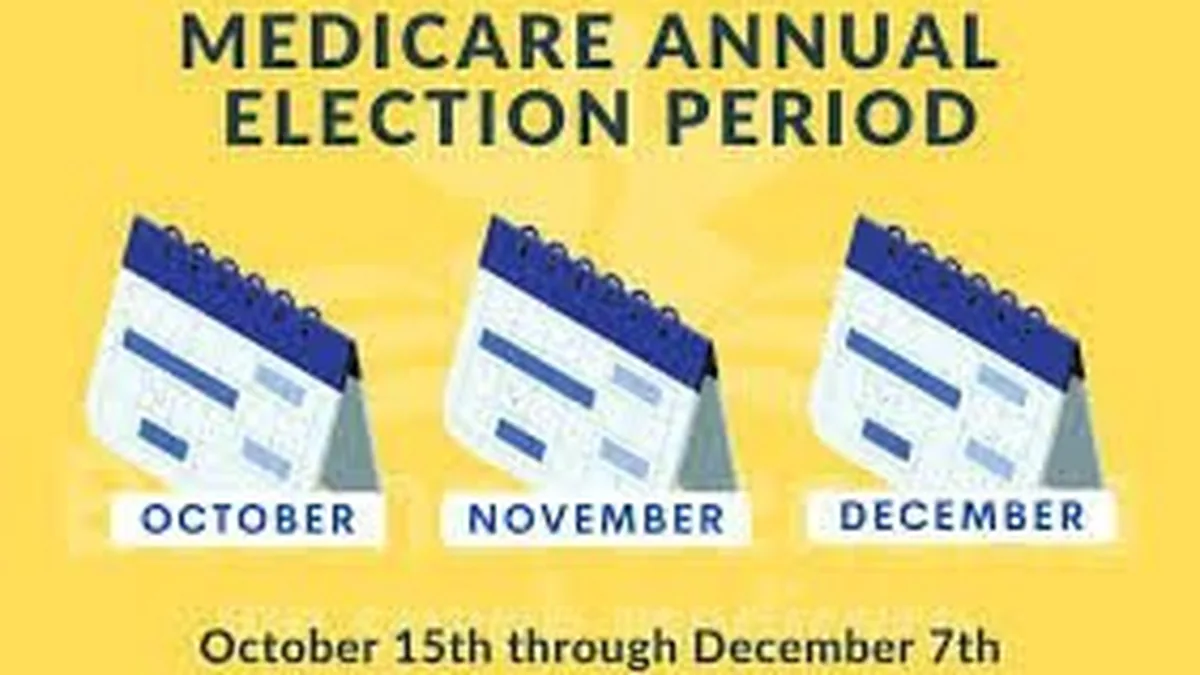
The Medicare election period — also known as the Annual Enrollment Period (AEP) — runs from October 15 to December 7 every year. During this time, Medicare beneficiaries can enroll in, switch, or drop Medicare Advantage Plans (Part C) and Prescription Drug Plans (Part D).

The Importance of Staying Informed

Making informed decisions during the Medicare election period can significantly affect your healthcare services for the coming year.

Plans change annually; what worked for you this year might not be the best option next year. New medications, changes in health status, or alterations in plan formularies and networks are all vital considerations.

Evaluating your options during the AEP can potentially save you a significant amount of money.

Plans may adjust their premiums, deductibles, and co-payments, and there may be new plans that offer more cost-effective benefits suited to your current needs.

Coverage for New Needs

Your health care needs evolve over time. The Medicare election period is the ideal time to align your health coverage with your current health status.

It's wise to review your health changes over the past year and anticipate what services you might require in the year ahead.

Failing to act within the election period, especially when enrolling in Part D for the first time or switching to a plan with part D coverage, can lead to permanent penalties.

Making timely changes prevents these additional costs.

Access to New Benefits

Medicare Advantage and Prescription Drug Plans may add new benefits that better suit your lifestyle.

Staying updated on these offerings can enhance your quality of life and provide you with services that were previously unavailable.

Tips for Navigating the Medicare Election Period

1. Review Your Current Plan: Always review the Annual Notice of Change (ANOC) you receive from your plan. It outlines any changes coming in the next year.

2. Assess Your Health Care Needs: Consider recent hospital visits, new diagnoses, or expected surgeries.

3. Compare Plans: Use the Medicare Plan Finder or consult with a Medicare counselor to compare different plans available in your area.

4. Check Drug Formularies: Make sure your drugs are covered and at what cost.

5. Understand the Network: Confirm that your preferred doctors and hospitals are in-network if you're considering a Medicare Advantage Plan.

6. Seek Assistance: If you're overwhelmed, SHIP (State Health Insurance Assistance Program) offers free counseling for Medicare recipients.

Medicare Election Period – In Closing

The Medicare Election Period is not simply an administrative duty; it is a critical time for securing your physical and financial well-being in the year to come.

It's your yearly chance to reassess your healthcare needs and adjust your Medicare plans accordingly.

Remember, the choices you make during this period take effect on January 1 of the next year, so being proactive and informed can make all the difference in gaining peace of mind regarding your healthcare services.

Make the Medicare election period count — evaluate your options, make necessary changes, and ensure your health coverage meets your needs for the new year.

Your future self will thank you.

Did you find this blog post Medicare Election Period valuable and insightful?

I hope you did because I want to help others benefit from this valuable information too!

Share the knowledge and let’s spread the value and empower more seniors together.

Call 980-689-0662 Book a Consultation

How Medicare Election Period connects with the rest of your coverage

Most people do not choose medicare election period in isolation. Foxworth Insurance Agency connects this decision to Medicare plan guidance, Medicare Advantage plans, and Medicare Supplement plans so the plan you choose does not create a hidden gap somewhere else in your insurance picture.

Local availability and timing can also matter. Clients often compare options first in Charlotte, NC, then review similar questions for households in Huntersville, NC, Concord, NC, and Gastonia, NC. South Carolina families can start with Charleston, SC or Columbia, SC and then schedule a personal review when the county, carrier, or enrollment period changes the answer.

If you are still researching, start with Medicare Enrollment Deadlines Explained for Turning 65, then read Understanding Medicare Part-D and Understanding Medicare Supplement Insurance (Medigap). For official program rules, compare what you read with Medicare.gov and CMS; then use a local Foxworth consultation to apply those rules to your doctors, prescriptions, budget, state, and timeline.

For a deeper plan review, we may also look at Part D prescription drug plans, your current policy, your renewal notice, family responsibilities, and whether another coverage layer such as hospital indemnity, critical illness insurance, or final expense coverage should be part of the conversation.

What to know before choosing Medicare Election Period

Medicare Election Period decisions usually affect more than one part of a household’s financial life. A plan that looks inexpensive on a monthly basis may still create problems if the deductible, waiting period, network, benefit limit, prescription coverage, renewal rule, or coordination with another policy does not match how the person actually uses coverage. That is why Foxworth Insurance Agency treats medicare election period as part of a larger coverage review instead of a single quote request.

For families, retirees, veterans, and business owners in Charlotte, NC, North Carolina, South Carolina, and Virginia, the first step is to clarify the job the coverage needs to do. Some clients want protection against a major medical bill. Some are trying to bridge a gap before Medicare. Some want a life insurance policy that protects a spouse, children, mortgage, or final expenses. Others need help understanding how Medicare, VA benefits, employer coverage, ACA marketplace plans, dental and vision benefits, hospital indemnity, or critical illness coverage work together.

Questions we use to narrow the options

A good comparison starts with practical questions. What coverage do you already have? Which doctors, hospitals, pharmacies, or medications matter? Is the decision tied to turning 65, leaving employer coverage, moving, retiring, getting married, adding a dependent, or reviewing a renewal notice? What monthly premium fits the budget, and what out-of-pocket risk would create financial stress? These questions help separate a plan that sounds good from a plan that actually fits.

Once the situation is clear, we compare the relevant coverage layers. That may include Medicare plan guidance, Medicare Advantage plans, Medicare Supplement plans, and Part D prescription drug plans. The goal is not to make the page longer for the sake of length. The goal is to give readers enough context to understand what they should bring to a consultation and what trade-offs they should expect to discuss.

Why local context matters

Insurance rules and plan options can change by state, county, carrier, plan year, enrollment period, age, income, household size, and health status. A general article can explain the framework, but it cannot confirm whether a specific plan is the best fit for a specific household in Charlotte, Mecklenburg County, Raleigh, Greensboro, Charleston, Columbia, or another community we serve. Local review matters because a small detail can change the recommendation.

Provider access is one example. A plan can look attractive until a preferred doctor, specialist, hospital, pharmacy, or prescription is not handled the way the client expected. Budget is another example. A low premium may be helpful, but only if the deductible, copays, coinsurance, and out-of-pocket exposure are manageable. Timing is another example. Missing an enrollment window, misunderstanding a special enrollment period, or waiting too long to review a change can create avoidable stress.

Another common mistake is comparing one policy feature without looking at the rest of the household. A Medicare plan may need to be checked against dental, vision, prescription, hospital, or travel needs. A life insurance policy may need to be checked against mortgage debt, beneficiary goals, final expenses, and how long income replacement is needed. A short-term health plan may solve an immediate gap but still require a plan for what happens when the bridge period ends. The right conversation connects those moving pieces instead of treating every product as a separate purchase.

How to prepare for a better conversation

Before a consultation, gather your current policy or plan card, recent renewal notices, prescription list, doctor list, household income estimate if marketplace coverage is involved, retirement timeline if Medicare is involved, and any questions about family responsibilities or beneficiary goals. If you are comparing life insurance, think about the amount of debt, income replacement, final expenses, and the length of time protection is needed. If you are comparing health or Medicare coverage, think about medical usage, travel, pharmacy preferences, and upcoming procedures.

Readers who want more background can also review Medicare Enrollment Deadlines Explained for Turning 65 and Understanding Medicare Part-D. Those supporting articles help explain related issues before a one-on-one review. When you are ready, Foxworth Insurance Agency can walk through the details, compare available options, and explain the trade-offs in plain English so the decision is easier to make and easier to revisit later.

Coverage should also be reviewed after the first enrollment or application. Plans, carrier rules, household needs, income, prescriptions, doctors, retirement dates, and family responsibilities can change. A page like this gives a starting framework, but the stronger long-term approach is to revisit coverage when something material changes and to keep the plan aligned with the person rather than the other way around.

Have a question this article didn't answer?

Call 980-689-0662 or schedule a free consultation. We answer in plain English.